
Oral Probiotics Explained: Understanding Strains, Dental Health, and Research
By the Wellness Center USA editorial team ·
Oral probiotics are chewable tablets, lozenges, and drops that contain live bacteria and are marketed for teeth, gums, and fresh breath. The idea is appealing, but the research is early and mixed, and product labels often reveal very little. This article explains how the mouth's bacteria work, which strains have been studied, what the evidence does and does not show, and how to think about the products on the market.
How the Mouth's Bacteria Differ From the Gut's
Your mouth is home to hundreds of species of bacteria, along with fungi and viruses. Together they form the oral microbiome. It differs from the gut microbiome in important ways:
- Where it lives. Oral bacteria live in saliva, on the tongue, and in a sticky film called dental plaque (a biofilm) on teeth and along the gum line. Gut bacteria live in the intestines.
- Environment. The mouth is exposed to air, food, brushing, saliva flow, and rapid changes in acidity. The gut is a largely oxygen-poor environment.
- What goes wrong. In the mouth, imbalance is linked to tooth decay (acid-producing bacteria feeding on sugar) and gum disease (inflammation from plaque bacteria at the gum line). Gut problems involve different conditions.
- Strain behavior. A probiotic that survives in the gut does not necessarily colonize the mouth, and vice versa.
Because the two environments are so different, evidence about gut probiotics does not carry over to oral products. See our article on probiotics, foods, and research for the gut side.

What Are Oral Probiotics?
Oral probiotics are live microorganisms intended to benefit oral health when used in adequate amounts. Products are usually chewable or dissolving tablets or lozenges, so that the bacteria spend time in the mouth rather than being swallowed immediately. The scientific definition of a probiotic requires a proven benefit for the specific strain, so a product that simply contains bacteria is not automatically a probiotic.
Strains Studied in Oral Health
Research has looked at several strains, including:
- Lactobacillus reuteri (certain strains), studied mainly for gum inflammation and plaque
- Streptococcus salivarius (for example, strains K12 and M18), studied for bad breath and throat health
- Lactobacillus rhamnosus and other lactobacilli, studied for plaque and cavity-related bacteria
- Bifidobacterium animalis* subsp. *lactis strains, studied for gingivitis
Benefits are strain-specific. A result for one named strain cannot be applied to another strain of the same species, and many products do not name their strains in enough detail to match them with research.
What Does Research Say About Plaque and Gum Health?
Gingivitis. A 2020 systematic review and meta-analysis in the Australian Dental Journal (Akram and colleagues) included 10 double-blind, placebo-controlled trials. Individual trials reported improvements in gum bleeding, but the authors concluded there is weak evidence that probiotics reduce gum inflammation in gingivitis. For L. reuteri, differences in gingival index and plaque index were not statistically significant, and they noted significant heterogeneity and limited data.
Periodontitis. A review in Evidence-Based Dentistry (Kumar and colleagues, 2017) found limited evidence of a short-term benefit when probiotics are added to professional deep cleaning (scaling and root planing). This is a dental-office treatment, and the findings do not show that over-the-counter probiotics treat gum disease on their own.
Cavities. The evidence for probiotics preventing tooth decay is limited. The strongest dental-caries evidence is for fluoride, good brushing, and reducing sugar. A Cochrane review of xylitol (Riley and colleagues, 2015) concluded that evidence for xylitol-containing products preventing cavities is of low quality, with some signs of benefit from fluoride toothpaste containing xylitol in children, and not enough evidence for other xylitol products.
Limitations of the Evidence
- Trials are often small, short, and use different strains and doses.
- Results vary, and many measured short-term changes in bleeding or plaque rather than long-term outcomes such as tooth loss.
- Few trials test finished over-the-counter products that are sold today.
- Industry funding is common, and publication bias is possible.
- Benefits in people with gingivitis do not show benefits for healthy mouths.
Oral Hygiene Comes First
No oral probiotic replaces the proven basics:
- Brush twice a day with fluoride toothpaste.
- Clean between your teeth daily.
- Limit sugary and acidic foods and drinks.
- Avoid tobacco.
- See a dentist regularly, and sooner if you have bleeding gums, pain, loose teeth, or persistent bad breath.
The National Institute of Dental and Craniofacial Research (NIDCR) emphasizes that good daily cleaning and regular dental care are the main tools for preventing gum disease.
Differences Between Products
Products sold as "dental supplements" fall into very different categories. Checking what a product actually contains matters.
| Product | What its official site lists | Is it a probiotic? |
|---|---|---|
| ProDentim | Probiotic strains (L. paracasei, B. lactis BL-04®, L. reuteri), inulin, and others | Yes |
| DentaBiome | Probiotic strains (L. plantarum, L. salivarius, L. rhamnosus) plus xylitol and other ingredients | Yes |
| ProvaDent | Four unnamed probiotic strains plus xylitol and other ingredients | Yes (strains not named) |
| Dentolyn | Vitamin C, vitamin B6, iodine, xylitol, chlorella, zeolite | No |
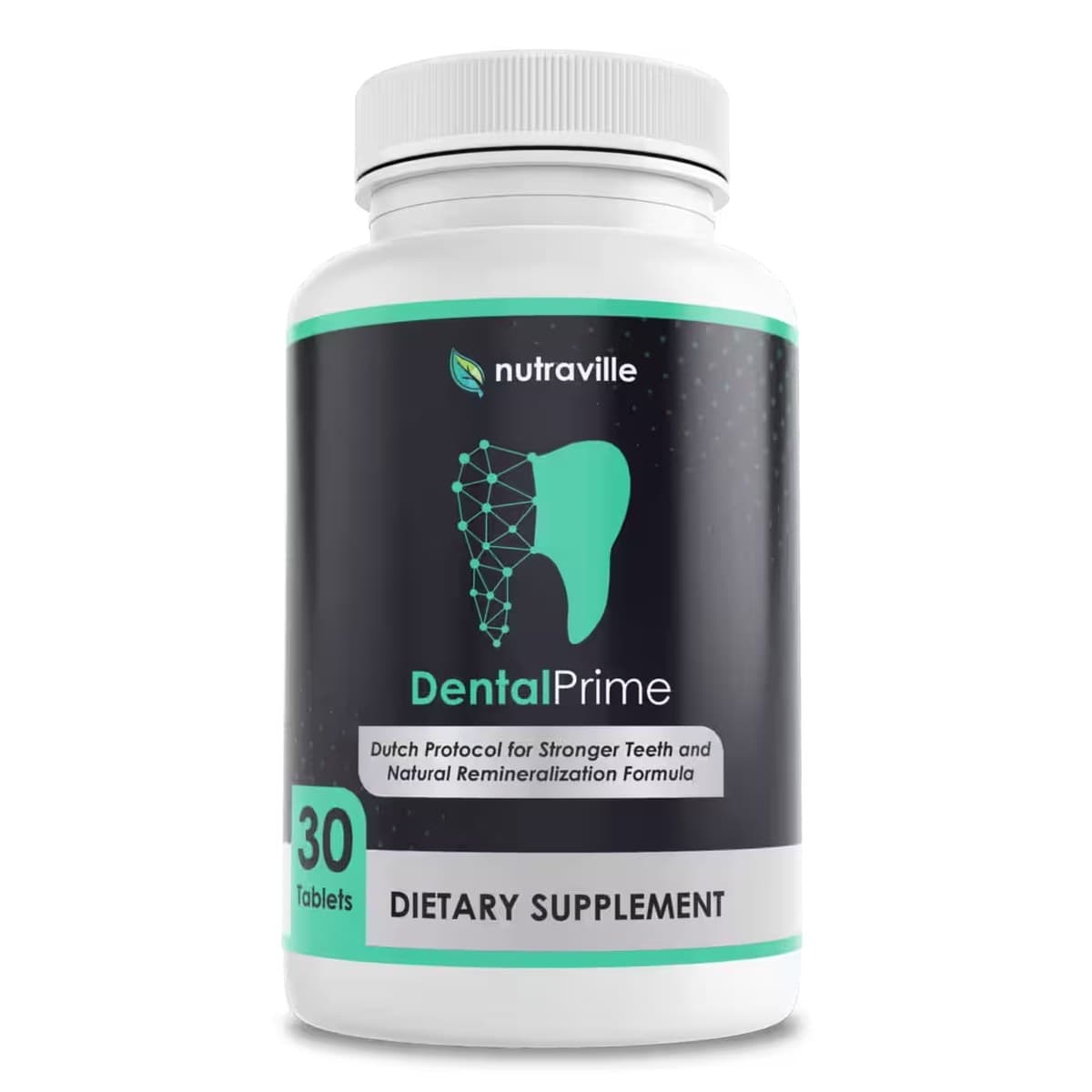
| DentalPrime | Vitamin D3, vitamin K2, calcium, zinc, xylitol, cranberry | No |
Dentolyn and DentalPrime describe themselves as supporting "oral and gut biome," but their listed ingredients are vitamins, minerals, and plant ingredients, not live bacteria. That difference matters if you are specifically looking for a probiotic. Our overviews describe what each brand publishes, and none of these brands publishes a clinical trial of its finished product. See our ProDentim review, our comparison of oral probiotics, and our comparison of DentalPrime, DentaBiome, and ProvaDent.
Supplement-Label Considerations
- Strain names with codes (such as a letter-number after the species).
- Live count (CFU) through expiry, not just at manufacture.
- Amounts of every ingredient, since proprietary blends hide doses.
- Xylitol. It is common in oral products and is toxic to dogs. Keep products away from pets.
- Sugar alcohols can cause digestive upset in some people.
- Allergens and additives.
- Independent testing and realistic claims.
Read our guide to reading a supplement label.
Safety
Probiotics are generally well tolerated by healthy people, but people with weakened immune systems, central venous catheters, serious illness, or recent surgery should ask a doctor first, since rare infections have been reported. Ask a pharmacist if you take medicines, and a healthcare professional if you are pregnant or nursing. Do not use a supplement to treat symptoms that need dental or medical care.
Questions for Your Dentist
- Do my gums or teeth show signs that need professional treatment first?
- Would a probiotic or other supplement add anything to my routine?
- Are there ingredients I should avoid, such as xylitol if I have a dog?
- What brushing, flossing, or mouthwash changes would help most?
- How often should I come in for cleanings?
Frequently Asked Questions
Do oral probiotics replace brushing and flossing?
No. They are, at most, an add-on to daily oral hygiene and professional dental care.
Do oral probiotics work?
Some small trials report benefits for gum inflammation, but a 2020 meta-analysis found the evidence weak, and results depend on the specific strain.
Are oral probiotics different from gut probiotics?
Yes. They are designed for a different environment, and benefits do not transfer automatically.
Can I take oral probiotics with antibiotics or mouthwash?
Ask a pharmacist or dentist. Antiseptic mouthwashes may reduce bacteria.
Is xylitol safe?
It is widely used in sugar-free products and is generally safe for people, but can cause digestive upset in larger amounts and is toxic to dogs.
Final Thoughts
Oral probiotics are a young area of research with promising but inconclusive results. They are not a substitute for dental care. If you want to try one, check that it really is a probiotic, look for named strains and clear labels, and talk to your dentist.
Medical and Dental Disclaimer
This article is for general educational purposes only and does not provide medical or dental advice, diagnosis, or treatment. Consult a dentist or qualified healthcare professional about oral health concerns.
References and Further Reading
- Akram Z, et al. (2020). Clinical efficacy of probiotics in the treatment of gingivitis: A systematic review and meta-analysis. Australian Dental Journal.
- Kumar S, et al. (2017). Limited evidence shows short-term benefit of probiotics when used as an adjunct to scaling and root planing in the treatment of chronic periodontitis. Evidence-Based Dentistry.
- Riley P, et al. (2015). Xylitol-containing products for preventing dental caries in children and adults. Cochrane Database of Systematic Reviews.
- National Institute of Dental and Craniofacial Research (NIDCR). Gum Disease
- National Center for Complementary and Integrative Health (NCCIH). Probiotics: What You Need To Know
Related products
- View DentaBiome
DentaBiome
View product - View Dentolyn
Dentolyn
View product - View DentalPrime
DentalPrime
View product
Related articles
Blood Sugar Support Supplements: Ingredients, Evidence, and Safety
"Blood sugar support" is one of the busiest categories in the supplement market. Bottles promise to "balance," "stabilize," or "support" glucose, often with a list of botanicals an…
Nov 3, 2026
Women's Health During Menopause: Understanding Common Changes and Wellness Options
Menopause is a normal stage of life, but the years around it can bring changes that feel anything but normal: hot flashes, broken sleep, shifting moods, and questions about bone an…
Nov 3, 2026
Is Derila Ergo Pillow Legit? An Evidence-Based Buying Guide
"Is the Derila Ergo pillow legit?" is one of the most common questions people ask before ordering, and the answers online range from "total scam" to "perfectly fine." Neither extre…
Oct 31, 2026