
Best Pillow for Neck Pain: Understanding Cervical Support and Pillow Design
By the Wellness Center USA editorial team ·
Waking up with a stiff or sore neck is common enough that "best pillow for neck pain" is one of the most searched pillow questions. It is also a question that cannot be answered with one product. Neck discomfort has many causes, pillow research is limited and mixed, and no pillow has been shown to cure or treat a medical condition. This guide explains how pillow design relates to neck comfort, what the research suggests, what cervical and contour pillows are, and how to think about the Derila Ergo in that context.
Affiliate disclosure: Wellness Center USA may earn a commission if you buy through links on this page, at no extra cost to you. Our editorial content does not depend on commissions. See our affiliate disclosure.
Why Neck Discomfort Happens During Sleep
Many things can contribute to neck stiffness or pain on waking:
- Sleeping position. Lying with your neck rotated or bent for hours, especially on your stomach, can strain muscles and joints.
- Pillow height and firmness. A pillow that is too high or too low can leave the neck bent sideways or tilted up or down.
- Daytime strain. Hours at a desk, looking down at a phone, or carrying tension in the shoulders can make the neck sore at night.
- Mattress. A mattress that is too soft or too firm can affect alignment.
- Stress and poor sleep. Muscle tension often rises with stress.
- Medical causes. Arthritis of the neck, disc problems, nerve irritation, injuries such as whiplash, and other conditions can all cause neck pain.
Because the causes vary, a pillow is one of several things to consider, and it will not fix every problem.

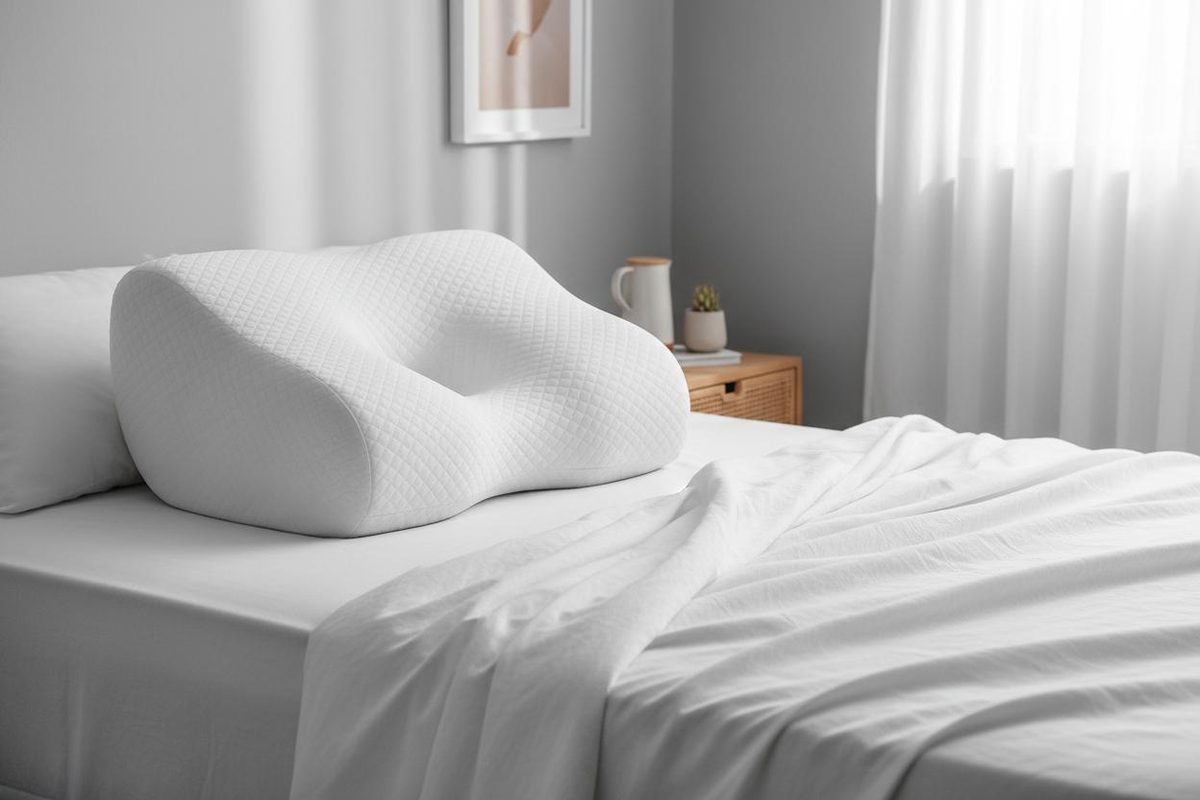
Illustrative stock image, not a photograph of a specific product.
Pillow Height and Sleeping Posture
The goal of a supportive pillow is to keep your neck in a comfortable, roughly neutral position relative to your spine.
- Back sleepers generally do better with a lower or medium pillow that supports the natural curve of the neck without pushing the head forward.
- Side sleepers generally need more height to fill the gap between the shoulder and head. See our guide to the best pillow for side sleepers.
- Stomach sleepers often need a very thin pillow or none, because a high pillow bends the neck backward. Many people find stomach sleeping hard on the neck, but changing the habit can be difficult.
There is no universally correct height. A 2021 review in Healthcare (Lei and colleagues) concluded that "there remain no firm conclusions about the optimal pillow height for the supine and lateral positions."
Cervical and Contour Pillow Designs
"Cervical pillow" and "contour pillow" are marketing and descriptive terms, not medical categories. They usually mean a pillow with a shaped surface, such as a raised roll or ridge under the neck and a dip for the head, and sometimes shoulder or arm cut-outs. The idea is to support the natural curve of the neck.
Some people find this shaping comfortable. But:
- A fixed shape means a fixed height. If it is too high or low for you, there is nothing to adjust.
- Fit depends on your anatomy (neck length, shoulder width) and sleeping position.
- The research does not show that contour shaping is better than a regular pillow. In a 2009 study of 106 side sleepers in Manual Therapy (Gordon and colleagues), there was no evidence that a foam contour pillow had advantages over regular-shaped pillows.
Our comparison of memory foam and cervical pillows explains the terms in more detail.
Memory Foam Versus Traditional Pillows
- Memory foam molds to your head and neck and eases pressure for some people. It can feel warm and slow to rebound, and solid versions have a fixed height.
- Latex is springier and often cooler.
- Fiber (polyester) and feather/down pillows are soft and compressible, and they flatten over time.
- Shredded foam and adjustable pillows let you add or remove fill.
In the same 2009 Manual Therapy study, rubber (latex) pillows did better than participants' own pillows for waking neck pain, sleep quality, and comfort, while foam and polyester pillows performed about the same as participants' own, and feather pillows were not recommended. A 2021 paper in Clinical Biomechanics (Pang, Tsang, and Fu) examined pillow designs for neck pain, waking symptoms, sleep quality, and alignment, and reported that some designs, including spring and rubber pillows, reduced neck pain, that "pillow designs did not influence sleep quality" in people with chronic neck pain, and that cervical alignment "may be significantly impacted by the shape and height of the pillow." These are small, short studies, and they do not show that any single pillow treats neck pain.
What the Research Does and Does Not Show
- Pillow shape and height can influence neck alignment and comfort.
- Results vary between studies, and there is no agreed ideal.
- Some studies favor latex or rubber pillows, but they are limited in size and duration.
- No pillow has been proven to cure or treat neck pain or spinal conditions.
- Persistent neck pain deserves a proper assessment, not just a new pillow.
Derila Ergo: Design and Limitations
The Derila Ergo Neck Support Pillow is a fixed contour pillow made of 100% polyurethane memory foam, with shoulder arches, arm-support areas, and different height zones, according to the official site. It has a removable, machine-washable cover and no adjustable fill. Derila's own FAQ describes it as designed for comfort and support, "not as a medical treatment device," and advises people with specific medical conditions, recent neck injuries, or recovery from surgery to consult a healthcare provider. The site's product data, however, lists it in a "Neck Pain Relief" category, and marketing language on the web can go further than the evidence.
Points to weigh:
- The zone heights and foam density are not published, so you cannot compare them with your measurements.
- The official guidance on sleeping positions is not entirely consistent (the product description says "back and stomach sleepers," while the FAQ gives advice for side sleepers).
- The research does not show that foam contour pillows outperform regular pillows.
- A fair trial and clear return terms matter. See our Derila Ergo review, our overview on the Derila Ergo product page, and our investigation of whether the Derila Ergo pillow is legit for details on ordering and returns.
How to Choose a Pillow if You Have Neck Discomfort
- Start with your main sleeping position, and choose a height that keeps your neck level.
- Consider an adjustable pillow if you are unsure about height.
- Match firmness to comfort, and avoid very soft pillows that let your head sink.
- Check your mattress, since it affects how much loft you need.
- Allow a trial period, and read the return policy.
- Pay attention to your daytime posture and movement, since they matter as much as your pillow.
- Replace worn pillows.
See our guide to choosing a pillow.
When to Consult a Healthcare Professional
See a doctor, physical therapist, or other qualified professional if:
- neck pain lasts more than a few weeks, keeps coming back, or is getting worse;
- pain follows an injury, a fall, or a car accident;
- pain spreads into the shoulder, arm, or hand, or you have numbness, tingling, or weakness;
- you have severe headaches, fever, a stiff neck with sensitivity to light, trouble walking, or changes in bladder or bowel control (seek urgent care); or
- you snore loudly, stop breathing during sleep, or feel very sleepy in the daytime.
Seek emergency care for sudden severe neck pain with fever, confusion, chest pain, or weakness on one side.
See the Derila Ergo: derelaergo.com
Frequently Asked Questions
What is the best pillow for neck pain?
There is no single best pillow. Fit matters, and research does not show that one design works for everyone.
Do cervical pillows work?
Some people find them comfortable, but evidence that cervical or contour pillows outperform regular pillows is limited.
Can a pillow cure neck pain?
No pillow has been shown to cure or treat neck pain. It may affect comfort.
Is memory foam good for neck pain?
Some people like it, but studies have not shown that it is better than other materials.
How long does it take to adjust to a new pillow?
Several nights, in many cases. Give it a fair trial, but stop using it if it causes pain.
Final Thoughts
A good pillow can make sleep more comfortable, but it is not a treatment for neck pain. Choose a design that fits your sleeping position, test it fairly, be skeptical of medical-sounding promises, and see a professional if your symptoms persist or worsen.
Medical Disclaimer
This article is for general educational purposes only and does not provide medical advice, diagnosis, or treatment. No pillow cures or treats neck pain or any medical condition. Consult a qualified healthcare professional about neck pain.
References and Further Reading
- Pang BCT, Tsang SMH, Fu SN. (2021). The effects of pillow designs on neck pain, waking symptoms, neck disability, sleep quality and spinal alignment in adults. Clinical Biomechanics.
- Gordon SJ, Grimmer-Somers K, Trott P. (2009). Pillow use: the behaviour of cervical pain, sleep quality and pillow comfort in side sleepers. Manual Therapy.
- Lei, et al. (2021). Pillow height for supine and lateral positions. Healthcare.
- MedlinePlus. Neck pain
- Derila Ergo Neck Support Pillow: derelaergo.com
Related products
- View Derila Ergo Neck Support Pillow

Derila Ergo Neck Support Pillow
View product
Related articles
Blood Sugar Support Supplements: Ingredients, Evidence, and Safety
"Blood sugar support" is one of the busiest categories in the supplement market. Bottles promise to "balance," "stabilize," or "support" glucose, often with a list of botanicals an…
Nov 3, 2026
Women's Health During Menopause: Understanding Common Changes and Wellness Options
Menopause is a normal stage of life, but the years around it can bring changes that feel anything but normal: hot flashes, broken sleep, shifting moods, and questions about bone an…
Nov 3, 2026
Oral Probiotics Explained: Understanding Strains, Dental Health, and Research
Oral probiotics are chewable tablets, lozenges, and drops that contain live bacteria and are marketed for teeth, gums, and fresh breath. The idea is appealing, but the research is…
Nov 3, 2026