
Memory Foam Pillow vs Cervical Pillow: What's the Difference?
Oct 31, 2026
"Memory foam pillow" and "cervical pillow" are often used as if they were two competing products, but they describe different things. Memory foam is a material. Cervical (or "contour") describes a shape. A pillow can be both, either, or neither. This comparison explains what each term means, how contour designs work, how loft and firmness fit in, and how to choose, without promising that any design treats a medical condition.
The Short Answer
| Memory foam pillow | Cervical (contour) pillow | |
|---|---|---|
| What the term describes | The material (viscoelastic polyurethane foam) | The shape (a curved surface meant to support the neck) |
| Can be made of | Memory foam, in solid, shredded, or cross-cut form | Memory foam, latex, fiber, or other materials |
| Shape | Rectangular, contoured, or any shape | Contoured, often with a raised neck area and a dip for the head |
| Height | Fixed (solid) or adjustable (shredded or loose fill) | Usually fixed, though some are adjustable |
| Evidence | Mixed; depends on the person | Mixed; no clear advantage over regular shapes in some studies |
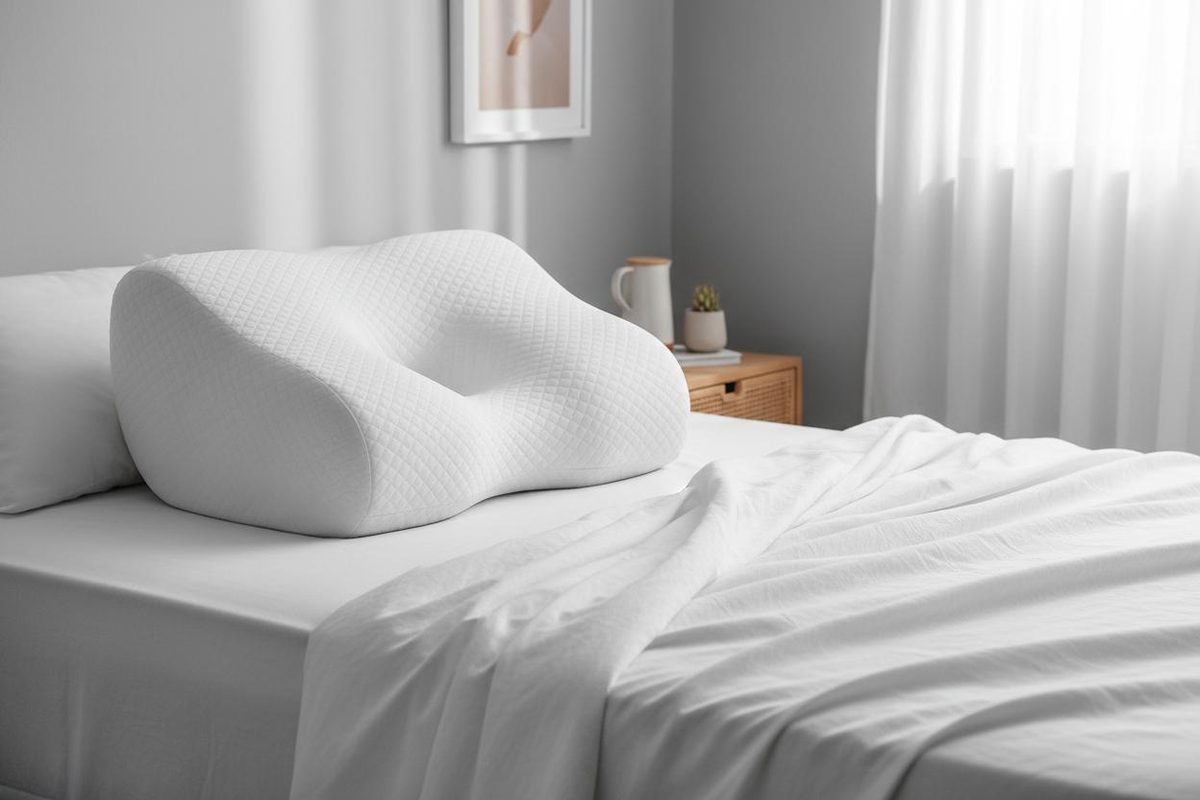
Illustrative stock image, not a photograph of a specific product.
What "Memory Foam" Means
Memory foam is a polyurethane foam that softens with body heat and pressure and slowly returns to shape. That slow response is the "memory." For pillows, this means the material molds to your head and neck, which some people find pressure-relieving and others find hot or hard to move on.
Memory foam pillows come in several forms:
- Solid (one piece), which keeps a consistent shape and height
- Shredded or cross-cut fill, which you can add to or remove, and which allows more airflow
- Gel-infused or ventilated versions, marketed as cooler
Foam can be certified for low emissions by programs such as CertiPUR-US, but check a certifier's database when a brand claims certification. A certification says something about content and emissions, not about whether the pillow suits your neck.
What "Cervical Pillow" Means
The cervical spine is the neck region of the spine. A "cervical pillow" is not a regulated medical category. It usually refers to a pillow with a shaped surface intended to support the natural curve of the neck, such as a roll under the neck and a hollow for the head. Some add shoulder or arm cut-outs.
Because the term is a marketing and descriptive label, it does not mean that a doctor has prescribed or approved the pillow, and it does not mean the pillow treats neck pain.
How Contour Designs Work
A contour pillow tries to do two things: support the curve of the neck and cradle the head, so that the neck is neither bent up nor down. A raised area under the neck may reduce the gap between neck and mattress for a back sleeper. A deeper hollow for the head may stop it rolling sideways. Side-sleeper designs may add a shoulder space.
The catch is that your anatomy and sleeping position determine what height and shape suits you, and a fixed contour cannot change. If the contour does not match your neck length or shoulder width, it may feel worse than a plain pillow.
What Research Suggests
- A 2009 study in Manual Therapy (Gordon and colleagues) tested a variety of pillows in 106 side sleepers over a week each. It found that rubber (latex) pillows performed better than participants' own pillows for waking neck pain, sleep quality, and comfort, that foam and polyester pillows performed about the same as participants' own, and that there was no evidence that a foam contour pillow had advantages over regular-shaped pillows.
- A 2021 paper in Clinical Biomechanics (Pang, Tsang, and Fu) reviewed pillow designs for neck pain, waking symptoms, sleep quality, and alignment. It reported that some designs, including spring and rubber pillows, reduced neck pain, that pillow designs did not influence sleep quality in people with chronic neck pain, and that cervical alignment may be significantly affected by pillow shape and height.
- A 2021 review in Healthcare (Lei and colleagues) found no firm conclusions about the optimal pillow height for back and side sleeping.
In short, shape and height matter for comfort and alignment, but there is no proof that a memory-foam or cervical design is better than other designs for everyone.
Firmness Levels
Firmness describes how much the pillow resists pressure. Soft pillows let your head sink, which can leave your neck tilted. Very firm pillows can push your head up. Medium to medium-firm is a common starting point, and personal preference counts. A pillow that feels comfortable for the first minute may not feel comfortable at 3 a.m., so allow a trial.
Pillow Loft
Loft is the pillow's height when compressed under your head. As a rule of thumb, side sleepers need more loft, back sleepers medium or low, and stomach sleepers very thin. Adjustable pillows let you tune loft. Fixed contours do not, so the published height matters. See our guides to the best pillow for side sleepers and how to choose a pillow.
Sleeping Positions
- Back: a lower or medium pillow that supports the neck curve without pushing the head forward. Contours with a raised neck roll are designed for this position.
- Side: a higher pillow to fill the shoulder gap, with a shoulder cut-out if you like the contour approach.
- Stomach: a very thin pillow or none.
- Combination: an adjustable pillow, or one with zones for different positions.
Benefits and Limitations
Memory foam
- Benefits: pressure relief, shape retention, wide availability.
- Limitations: can retain heat, slow response, a fixed height if solid, and odors from new foam for a few days in some products.
Cervical or contour shapes
- Benefits: guidance for head and neck position, shoulder or arm space in some designs, helpful for some back sleepers.
- Limitations: fixed height and shape, unclear advantage over regular shapes, and prices that are sometimes higher.
An Example: Where the Derila Ergo Fits
The Derila Ergo is both: a one-piece polyurethane memory-foam pillow in a contoured shape with different height zones, shoulder arches, and arm-support areas, per the official site. It does not have adjustable fill. Our Derila Ergo review covers the specifications and contradictions, and the product page has an overview. For an adjustable memory-foam alternative with loose fill, see our comparison with Coop.
How to Choose
- Pick the position you sleep in most and match the loft.
- Decide whether you want a fixed shape or adjustability.
- Think about temperature. Memory foam can be warm. Latex and ventilated designs may feel cooler.
- Check the trial and return policy. Fit is personal.
- Check care instructions and certifications, and verify any certification claim.
- See a clinician if you have ongoing neck pain.
See the Derila Ergo: derelaergo.com
Frequently Asked Questions
Is a cervical pillow the same as a memory foam pillow?
No. One describes a shape and the other a material, though a pillow can be both.
Are cervical pillows better for neck pain?
Not proven. A study of side sleepers found no advantage for a foam contour pillow over regular shapes.
Is memory foam good for side sleepers?
Some people like it, but height matters more than material.
Can I wash a memory foam pillow?
It depends on the product. Many cores are spot-clean only, and covers can be washed. Follow the care label.
How long does a memory foam pillow last?
It depends on quality and use. Replace it when it is flat, lumpy, or uncomfortable.
Final Thoughts
Think of memory foam as the "what" and cervical as the "shape." Neither is a medical treatment. Choose a height and firmness that suit your sleeping position, check the trial and return terms, and give any new pillow a fair few nights before deciding.
Medical Disclaimer
This comparison is for general educational purposes only and does not provide medical advice, diagnosis, or treatment. Consult a qualified healthcare professional about neck pain or sleep problems.
References and Further Reading
- Derila Ergo Neck Support Pillow: derelaergo.com
- Gordon SJ, Grimmer-Somers K, Trott P. (2009). Pillow use: the behaviour of cervical pain, sleep quality and pillow comfort in side sleepers. Manual Therapy.
- Pang BCT, Tsang SMH, Fu SN. (2021). The effects of pillow designs on neck pain, waking symptoms, neck disability, sleep quality and spinal alignment in adults. Clinical Biomechanics.
- Lei, et al. (2021). Pillow height for supine and lateral positions. Healthcare.
- MedlinePlus. Neck pain
- CertiPUR-US. Program overview