
Probiotics vs. Prebiotics: Differences and Food Sources
Oct 29, 2026
The words "probiotic" and "prebiotic" sound alike and appear next to each other on labels, which makes them easy to mix up. They are different things that play different roles in the gut. This comparison explains the difference, gives food examples, and outlines what to consider when you shop for supplements. For a broader introduction, see our article on probiotics: benefits, foods, and research.
The Short Answer
- Probiotics are live microorganisms that may provide a health benefit when taken in adequate amounts.
- Prebiotics are substances that your gut microbes use as food, and that benefit health. They are mostly certain types of fiber.
Think of probiotics as the "seeds" and prebiotics as the "fertilizer," although that is a simplification and the picture is more complex.
What Are Probiotics?
The International Scientific Association for Probiotics and Prebiotics (ISAPP) consensus definition says probiotics are "live microorganisms that, when administered in adequate amounts, confer a health benefit on the host." The words that matter are live, adequate amounts, and a health benefit, which has to be shown for the specific strain. A food or supplement containing bacteria is not automatically a probiotic.
Common probiotic genera include Lactobacillus (now split into several genera) and Bifidobacterium, and also the yeast Saccharomyces boulardii.
What Are Prebiotics?
ISAPP defines a prebiotic as "a substrate that is selectively utilized by host microorganisms conferring a health benefit." Most known prebiotics are non-digestible carbohydrates such as inulin, fructo-oligosaccharides (FOS), and galacto-oligosaccharides (GOS). Not all fiber is a prebiotic, and not all prebiotics are fiber, but a diet high in varied plant fiber supports a diverse gut microbiome.
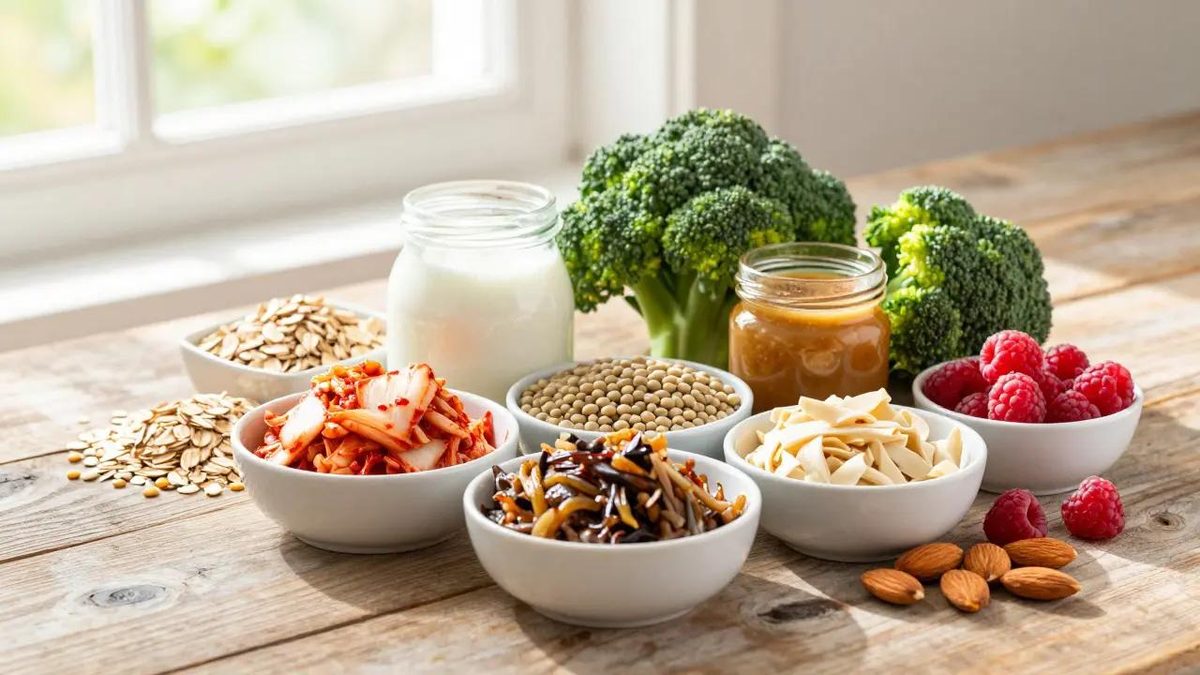
Comparison Table
| Feature | Probiotics | Prebiotics |
|---|---|---|
| Definition | Live microorganisms that give a health benefit in adequate amounts | Substances selectively used by gut microbes that give a health benefit |
| Common sources | Yogurt and kefir with live cultures, sauerkraut, kimchi, miso, tempeh, and supplements | Onions, garlic, leeks, asparagus, bananas, oats, legumes, chicory root, and supplements (inulin, FOS, GOS) |
| Purpose | Add specific microbes that may help with certain conditions | Feed beneficial microbes already in your gut |
| Research considerations | Effects are strain-specific and condition-specific; results are mixed | Evidence is growing for specific fibers, but is less developed for supplements; individual responses vary |
| Supplement-label considerations | Strain names and codes, amount in CFU through expiry, storage, allergens | Type and amount of fiber, other ingredients, and possible gas or bloating |
Probiotic Food Examples
- Yogurt and kefir labeled with live and active cultures
- Sauerkraut and kimchi (unpasteurized, refrigerated)
- Miso and tempeh
- Some fermented pickles (brine-fermented, not vinegar pickles)
Not all fermented foods contain live microbes when you eat them, since baking, canning, or pasteurizing can kill them. Fermented foods may be beneficial for other reasons, but are not necessarily "probiotics" by the scientific definition.
Prebiotic Food Examples
- Onions, garlic, leeks, and asparagus
- Bananas (especially slightly green ones)
- Oats and barley
- Beans, lentils, and chickpeas
- Chicory root and Jerusalem artichoke
- Whole grains and many fruits and vegetables
Dietary Fiber and the Gut Microbiome
Your gut contains trillions of microbes, and they ferment fiber to make compounds such as short-chain fatty acids, which are linked with gut health. A high-fiber, plant-rich diet is associated with greater microbial diversity. A 2021 study published in Cell (Wastyk and colleagues) found that a high-fiber diet and a high-fermented-food diet each changed immune markers in healthy adults, though the studies were small and short.
The Dietary Guidelines for Americans identify fiber as a nutrient most people do not get enough of, so for many people, eating more fiber-rich plants is a useful first step. Increase fiber gradually and drink water to limit gas and bloating. For practical ideas, see How to Improve Gut Health Naturally.
Food Sources Versus Supplements
Food provides a mix of fibers, nutrients, and microbes, and often replaces less healthy foods. Supplements give a defined dose of specific strains or fibers, which may suit some people or situations, but they are not a replacement for a healthy diet. Products vary a lot in quality, strain, count, and stability. Some products combine probiotics and prebiotics and are called synbiotics, but research on specific combinations is limited.
Why Probiotic Strains Matter
Probiotic effects are strain-specific: a benefit shown for one strain does not apply to another, even in the same species. A good label names the genus, species, and strain (for example, a code after the species name), the amount in colony-forming units (CFU) through the expiry date, and the storage requirements. Our ProDentim comparison shows how products differ in how much strain detail they publish.
Evidence Limitations
- Many trials are small, short, and use different strains and doses.
- Benefits have been reported for specific conditions (such as certain types of antibiotic-associated diarrhea) and with specific strains, but evidence is mixed or weak for many other uses.
- Results for prebiotic supplements are inconsistent, and individuals respond differently.
- Neither is a treatment for every digestive condition, and persistent digestive symptoms need medical assessment.
Safety Considerations
- Probiotics: generally well tolerated by healthy people, but gas and bloating can occur. People with weakened immune systems, central venous catheters, serious illness, or who are critically ill should not use them without medical advice, because rare infections have been reported. NCCIH notes that products may not contain what the label says.
- Prebiotics: can cause gas, bloating, and cramping, especially at higher amounts and in people with irritable bowel syndrome. People on a low-FODMAP diet may need to avoid some prebiotic foods and supplements.
- Allergens and additives: check labels for dairy, soy, sweeteners, and sugar alcohols.
- Pregnancy, infants, and medicines: ask a healthcare professional.
How to Evaluate a Product Label
- Are the strains named with codes?
- Is the CFU count guaranteed through expiry?
- What is the amount and type of prebiotic fiber?
- Are there independent tests?
- Are the claims realistic?
- What are the storage needs and other ingredients?
See our guide to reading a supplement label.
Frequently Asked Questions
Do I need both probiotics and prebiotics?
Not necessarily. A diet rich in fiber provides prebiotics, and some people also eat fermented foods or use specific probiotics for a reason.
Are probiotics better than prebiotics?
They do different things, and neither is universally better.
Is yogurt a probiotic?
Only if it contains live cultures, and the strains and amounts matter for any benefit claim.
Can prebiotics cause gas?
Yes, particularly if you increase them quickly.
What is a synbiotic?
A product that combines probiotics and prebiotics.
Final Thoughts
Probiotics are live microbes, and prebiotics are food for microbes. Food-first is a sensible approach for most people. If you consider supplements, read labels critically, remember that benefits are strain-specific, and talk to a healthcare professional if you have a medical condition or ongoing symptoms.
Medical Disclaimer
This comparison is for general educational purposes only and does not provide medical advice, diagnosis, or treatment. Consult a qualified healthcare professional about digestive symptoms or before taking a supplement.
References and Further Reading
- Hill C, et al. (2014). The International Scientific Association for Probiotics and Prebiotics consensus statement on the scope and appropriate use of the term probiotic. Nature Reviews Gastroenterology & Hepatology.
- Gibson GR, et al. (2017). The International Scientific Association for Probiotics and Prebiotics (ISAPP) consensus statement on the definition and scope of prebiotics. Nature Reviews Gastroenterology & Hepatology.
- Wastyk HC, et al. (2021). Gut-microbiota-targeted diets modulate human immune status. Cell.
- National Center for Complementary and Integrative Health (NCCIH). Probiotics: What You Need To Know
- U.S. Department of Agriculture and U.S. Department of Health and Human Services. Dietary Guidelines for Americans