
How to Choose Dietary Supplements Safely: A Practical Guide
Oct 28, 2026
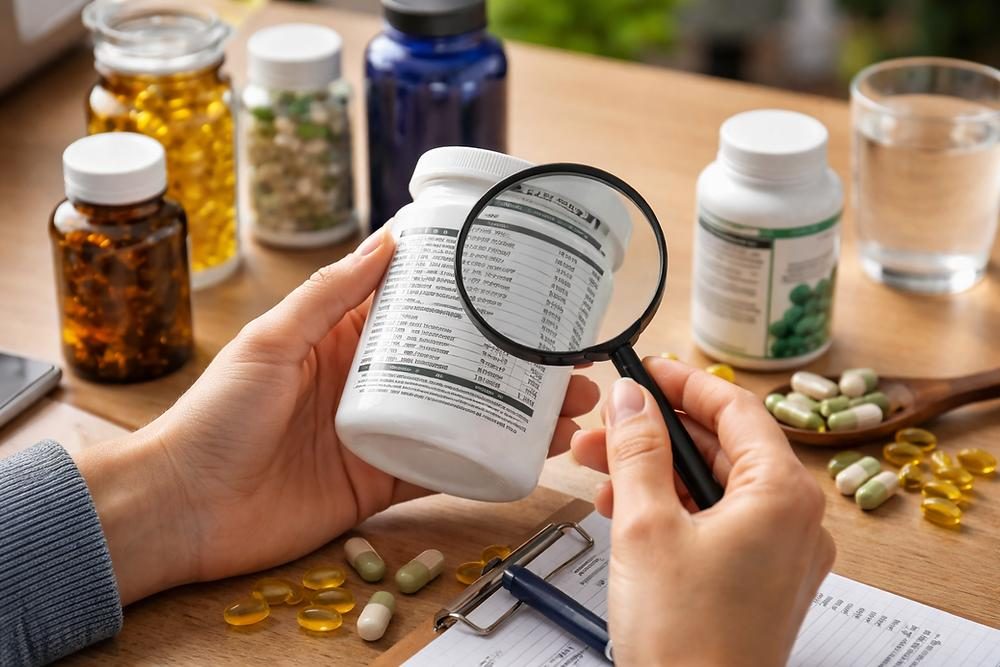
Dietary supplements are easy to buy and hard to judge. Labels are full of promises, ingredient lists can be confusing, and the products are regulated differently from medicines. This guide gives you a practical, step-by-step process for choosing supplements more safely, using public guidance from US health agencies.
Step 1: Start With a Reason, and Talk to a Professional
Before buying anything, ask: what problem am I trying to solve, and is a supplement the right tool? Food, sleep, activity, and medical care often matter more. Talk to a doctor, pharmacist, or registered dietitian, especially if you:
- are pregnant, breastfeeding, or planning surgery;
- take prescription or over-the-counter medicines;
- have a long-term condition such as kidney, liver, or heart disease; or
- are giving a supplement to a child or older adult.
Tell them about every supplement you take. The NIH recommends keeping an up-to-date list.

Step 2: Understand How Supplements Are Regulated
In the United States, the FDA does not approve dietary supplements for safety or effectiveness before they are sold. Manufacturers are responsible for making sure products are safe and that label claims are truthful. The FDA can act after a problem is identified. So the label and the company's honesty matter more than they would for a drug.
Supplements may not claim to diagnose, treat, cure, or prevent a disease. Be wary of any that do.
Step 3: Read the Supplement Facts Panel
The panel is the most reliable part of the label. Check:
- Serving size and how many servings are in the container.
- Each active ingredient and its amount, including the form (for example, elemental magnesium rather than the compound weight).
- Percent Daily Value, where listed, to see if you are near an upper limit.
- Proprietary blends. If a blend lists a total weight but not each ingredient's amount, you cannot judge dose or safety.
- Other ingredients, including allergens, sweeteners, and fillers.
- Expiry date and storage instructions.
Step 4: Check the Claims
- Be cautious with words such as "miracle," "breakthrough," "detox," "clinically proven," or "doctor recommended," when no study is cited.
- If a study is mentioned, check that it tested this product or these exact ingredients at this dose, in humans, and was independent.
- Treat testimonials as marketing, not evidence.
- Be wary of a long list of unrelated benefits for one product.
Step 5: Look at Quality Signs
- Third-party testing seals from organizations such as USP, NSF, or ConsumerLab indicate that an independent group has checked contents or manufacturing. A seal is not a safety guarantee, but it is a useful sign.
- Manufacturing information. A named company and a way to contact it are good signs.
- Published test results or a certificate of analysis on request.
Step 6: Check for Interactions and Warnings
Look up each ingredient in a trusted source such as the NIH Office of Dietary Supplements fact sheets or MedlinePlus. Common problem areas:
- Blood thinners (for example, vitamin K, some herbs).
- Antidepressants and sedatives (for example, St. John's wort, melatonin, 5-HTP).
- Blood pressure and diabetes medicines.
- Surgery: some supplements are best stopped in advance, as advised by your surgeon.
More is not always better. Many vitamins and minerals have upper limits, and exceeding them can cause harm.
Step 7: Buy From Trustworthy Sellers
- Use the official brand website or a reputable retailer. Look-alike sites are common.
- Read the refund and subscription terms before checkout, including any auto-ship.
- Avoid products that make sudden urgency claims or unusual guarantees.
- Keep the lot number and receipt.
Step 8: Start Carefully and Watch for Effects
- Start with one new product at a time, so you can tell what is causing an effect.
- Use the lowest labeled dose, and follow the directions.
- Stop and seek help if you notice rashes, swelling, trouble breathing, chest pain, severe stomach upset, or anything unexpected.
- Report problems to your healthcare provider and to the FDA through the Safety Reporting Portal.
A Quick Checklist
| Question | What to look for |
|---|---|
| Why am I taking this? | A clear goal, discussed with a professional |
| Are all ingredients and amounts listed? | No hidden proprietary blends |
| Are claims realistic? | No cure or treatment promises |
| Has it been independently tested? | A third-party seal or test report |
| Could it interact with my medicines? | Checked with a pharmacist |
| Is the seller reliable? | Official site, clear refund terms |
| Am I under upper limits? | Total from all products and food |
How We Apply This on Wellness Center USA
Our product overviews follow this guide: we report what a brand publishes about ingredients, directions, and refund terms, flag what is not disclosed, and avoid listing prices or results we cannot verify. For examples, see our ProDentim review and the comparison of oral probiotics.
Frequently Asked Questions
Are supplements safe because they are "natural"?
No. Natural ingredients can still cause side effects or interact with medicines.
Do I need a supplement if I eat well?
Many healthy people do not. Your doctor or dietitian can tell you if you have a specific need.
Does a third-party seal mean a supplement works?
No. It indicates that contents or manufacturing were checked, not that the product is effective.
How do I report a problem?
Tell your healthcare provider and report it to the FDA.
Medical Disclaimer
This guide is for general educational purposes only and does not provide medical advice. Always consult a qualified healthcare professional about your individual needs.
References and Further Reading
- NIH Office of Dietary Supplements. Dietary Supplements: What You Need To Know
- National Center for Complementary and Integrative Health (NCCIH). Using Dietary Supplements Wisely
- U.S. Food and Drug Administration. Dietary Supplements